Did You Know That Having Too Many Toys Can Actually Harm Your Child’s Development?
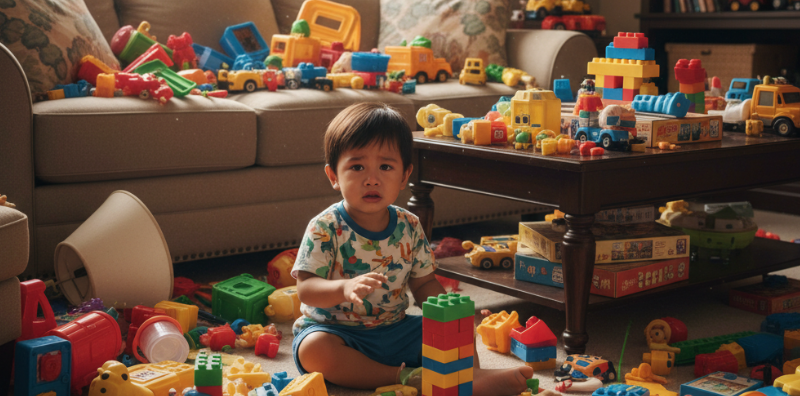
Studies show that having fewer toys helps children play longer, focus better, and become more creative. Too many toys can overwhelm kids and reduce meaningful play.
When my daughter was a toddler, I didn’t buy her a lot of toys. It wasn’t exactly a parenting philosophy at first — I just didn’t want our small condo to overflow with plastic clutter. But as the months went by, I began noticing something special.
She became incredibly creative. She loved pretend play. She could turn a scarf into a superhero cape, a spoon into a microphone, and a blanket into her “castle.” She didn’t need much to entertain herself.
Even more amazing, she was never afraid of getting bored. When there was “nothing to do,” she would invent her own stories, hum little songs, or create her own games. She also didn’t crave too much screen time, which is a huge relief for me as a mom.
At first, I thought I was just lucky to have a naturally imaginative child. But during one of our well-baby visits, our pediatrician smiled and said something that completely clicked:
“You’re actually doing her a favor by keeping toys minimal. When kids have fewer toys, they play deeper, imagine more, and focus better.”
And it turns out, science agrees.
The research behind “less is more”
In 2018, researchers from the University of Toledo conducted a fascinating study involving toddlers. They were placed in two different playrooms — one filled with 16 toys, and another with just 4 toys.
The results were eye-opening:
-
Kids with fewer toys played longer and more creatively.
-
They found more ways to use each toy (imagination mode: on!).
-
Meanwhile, kids surrounded by many toys switched from one to another quickly — showing shorter attention spans and less engagement.
The researchers concluded that too many toys can actually reduce the quality of play and creativity.
Why parents feel pressured to buy more
Modern parenting often makes us feel like we need to keep buying “developmental” toys for every stage: 0-3 months, 6-12 months, toddlerhood, preschool.
We’re told that each toy “helps” brain growth, motor skills, or sensory development. But according to the American Academy of Pediatrics (AAP), what truly drives child development isn’t the number of toys, but it’s how children play and who they play with.
In their policy statement The Power of Play (2018), the AAP highlighted that parent-child play:
-
Boosts language and problem-solving skills
-
Strengthens emotional regulation
-
Builds stronger relationships and confidence
So yes, toys can help, but only when they support play, not replace it.
The benefits of having fewer toys
-
They become more imaginative.
With fewer toys, kids learn to create their own worlds. A chair becomes a rocket ship; a box turns into a kitchen. This builds creativity and flexible thinking. -
They focus longer.
Less clutter = less distraction. Fewer choices train attention span and patience — the foundation of focus. -
They embrace boredom.
Boredom teaches kids to think, create, and problem-solve. It’s not something to avoid — it’s something to use. -
They crave screens less.
When their imagination is alive, they don’t rely on screens for stimulation. Their joy comes from within, not from flashing colors or sounds.
My reflection as a mom
Looking back, I used to worry I wasn’t giving my child “enough.” I’d see kids surrounded by shelves of toys and feel that pang of guilt. But now I see that less can truly be more.
Our children don’t need every new educational toy on the market. What they need is time, space, and presence. They need to be bored sometimes. They need to imagine freely.
When we clear the clutter, we make room for creativity, calm, and connection, the kind of development that no toy can buy.