When Kids Sleep in Separate Rooms: Should You Lock the Door? Privacy vs. Safety
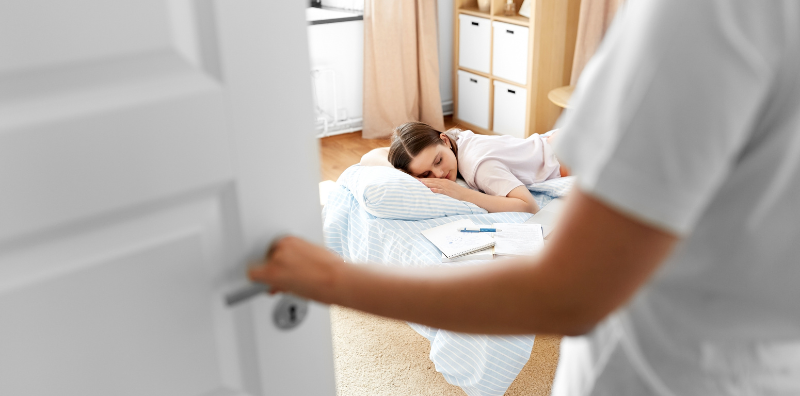
When children start sleeping in their own room, parents face a big question: Should kids lock bedroom doors? For many Filipino families, this sparks concerns about trust, safety, and the balance between closeness and independence. Learn how parents can respect a child’s privacy while keeping the home safe.
Filipino families, like Thai families, also have unique practices compared to the West. It’s common for children to sleep with their parents from birth, as many believe it makes caregiving easier and builds warmth. But as children grow, an important question arises: “Should kids lock bedroom doors when they start sleeping alone?” And once they do, another concern for parents is whether giving them that privacy affects safety.
The question of “should kids lock bedroom doors” goes beyond a simple household rule—it touches on a child’s psychological development, trust within the family, and everyday safety.
What Does It Mean for a Child to Sleep in Their Own Room and Lock the Door?
Having their own room marks an important step toward independence—both emotionally and physically.
According to developmental psychology, Erik Erikson explained that children aged 2–3 begin to develop a sense of “autonomy” or individuality, while teenagers enter the stage of identity vs. role confusion, a process of finding one’s self and privacy.
Locking the bedroom door is not just a small habit—it reflects a growing need for privacy. In Maslow’s Hierarchy of Needs, this is part of esteem and self-actualization. A child must feel they have rights over their own space in order to learn to respect the rights of others in the future.
From a Child Development Perspective: At What Age Should They Be Allowed to Lock the Door?
Every stage of childhood has different needs for safety and privacy. Knowing when it’s appropriate to allow locking the bedroom door can guide parents in making decisions:
- Young children (below 10 years old): Not recommended yet, since safety should come first—risk of fire, accidents, or being unable to call for help in emergencies.
- Late elementary to early high school (10–14 years old): Children start needing private space. Parents may allow locking the door in certain situations—like studying, changing clothes, or wanting quiet time. A “spare key” should still be kept for emergencies.
- Older teens (15 years and up): They should gradually be given more rights over privacy. If there’s warmth and open communication at home, locking the door won’t damage the relationship—it can actually strengthen trust.
Research from the American Academy of Pediatrics found that teens who feel their parents respect their private space tend to have better family relationships and higher self-esteem than those who are overly controlled.

Perspectives of Filipino Families: Culture and Concerns
In Filipino society, the question “should kids lock bedroom doors” often sparks debate, since it may sometimes be seen as unusual—or as a sign that the child is hiding something. Let’s look at why many Filipino parents worry about this.
Filipino culture places great importance on family closeness. That’s why when the issue of “should kids lock bedroom doors” comes up, it is often perceived as shutting out or showing a lack of trust toward parents. This can trigger worries that the child might be keeping secrets, spending too much time on gadgets, or engaging in risky behavior without their parents knowing.
The Benefits of Allowing Children to Lock Their Doors
Even if many parents feel uncomfortable, letting children lock their bedroom doors also comes with important benefits—particularly in building trust and mutual respect.
- Builds trust: Children feel their right to privacy is respected, which makes them more open to sharing with parents.
- Teaches responsibility: Kids learn to take care of their own space.
- Reduces conflict at home: Having a “buffer zone” of their own can lessen emotional clashes between parent and child.
The Drawbacks and Risks
However, locking the bedroom door isn’t always safe, and there are possible drawbacks and risks that parents should be mindful of as well:
- Safety risks: In emergencies like accidents or fire, parents might not be able to help quickly.
- Emotional distance: If locking the door becomes a way to avoid parents, it can weaken family closeness.
Research published in the Journal of Child and Family Studies also shows that boundaries without communication can actually weaken family relationships.
Worried Your Child Might Get Used to Not Locking Doors and Forget When Outside the Home?
Some parents argue that if children are never allowed to lock doors at home, they may become too used to “not locking” and be at risk when staying in a dormitory or someone else’s house. Here are some creative ways to address this concern:
- Rules by location: Explain that at home, it may be safe not to lock because parents are there, but outside the home—like in a dorm, boarding house, or sleepovers—locking is important for safety.
- Practice scenarios: Before your child stays somewhere else, rehearse the steps of “enter the room – check the door – lock.”
- Allow locking in certain cases: For example, when changing clothes.
- Communicate with reasoning: Children tend to understand and follow better when parents explain, rather than just forbid.
Finding Balance: Privacy + Safety
The best solution is to find a middle ground that makes both parents and children feel comfortable. Some ways to do this include:
- Using doors that can be locked but with parents holding a spare key.
- Setting family rules—for example, no locking at night, or when someone might need help.
- Open communication—discussing both the child’s and the parents’ needs.
- Creating a “Privacy Agreement”—for example, the child has the right to lock, but must open when parents ask.
In the end, the question “When children sleep in their own room, should they lock the door?” doesn’t have a one-size-fits-all answer. It depends on age, maturity, family relationship, and mutual trust.
The most important thing is to strike a balance between the child’s privacy and the family’s safety. If parents respect their child’s rights while also keeping communication open and setting fair rules, children will learn to manage their own privacy without neglecting safety.
Ultimately, giving children space doesn’t mean weakening family bonds—it’s about planting trust, which becomes the foundation for them to grow into confident adults who respect both themselves and others.
Originally published on theAsianparent Thailand