Teaching Kids to Learn from Problems: 10 Everyday Situations as Examples

Teach children problem-solving with these 10 real-life situations. Help your kids develop critical thinking, creativity, and emotional resilience through everyday problem-based learning.
Many mothers may have worried when their child faces small problems, cries, complains “I can’t do it,” or waits for adults to step in and fix things right away. Sometimes we unintentionally make our children dependent, without giving them the chance to try, make mistakes, and learn for themselves. But in fact, if we know how to teach children problem-solving using the concept of Problem-Based Learning (PBL), which is used worldwide in developing children and youth, we can effectively teach children problem-solving skills that help them gain confidence, thinking abilities, and emotional resilience.
What is Problem-Based Learning (PBL)?
According to Khon Kaen University, Problem-Based Learning (PBL) is a learning method that starts with a problem and lets children find the solution themselves.
Key points of PBL
- Children learn through real experiences, not just by listening or memorizing
- Encourages children to think, analyze, and find solutions on their own
- Parents or teachers act as coaches, not answer-givers
- Children practice key skills such as:
- Critical Thinking
- Creative Thinking
- Collaboration
- Rational Decision-Making
How is PBL different from regular learning?
- Regular learning: Children listen to the teacher give the answers → they get direct knowledge
- PBL: Children face a “problem or challenge” → research, ask, experiment, make mistakes → they gain both knowledge and life skills
Simply put, PBL doesn’t focus on memorization—it teaches children how to think, solve problems, and learn independently.
1. Benefits of Teaching Children to Learn from Problems
Teaching children to learn from problems not only supports their academics but also builds lifelong life skills.
- Practice Critical Thinking
Children won’t believe everything they hear. They will ask, think, and verify. - Boost Creativity
Kids will try new ways to solve problems, fostering creativity. - Develop EQ and Emotional Resilience
When facing failure, children won’t feel like it’s the end. Instead, they’ll learn from experience. - Build a Growth Mindset
According to Carol Dweck (2006), children who see failure as a learning opportunity are more motivated to improve themselves than those who fear mistakes.
How to Teach Kids with PBL in Daily Life
Parents can start simply:
-
- Begin with small everyday problems, such as: “The snacks are gone, what should we do?”
- Ask open-ended questions like: “What other ways could work?”
- Let your child experiment—don’t rush to fix things for them.
- Reflect on the outcome: “What did you learn from this?”
- Reinforce positively—praise their effort more than the result.
Real-Life Situations
Here are 10 situations that parents can use with PBL (Problem-Based Learning) to teach children how to learn from everyday problems:
-
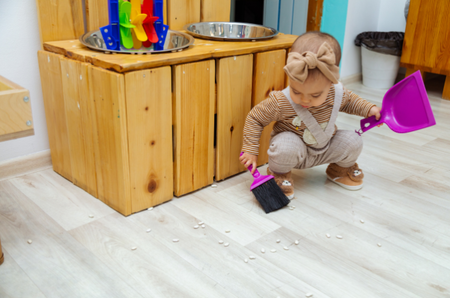
Child spills water: Instead of quickly wiping it up yourself, ask, “How will you fix this?” and let your child try cleaning it up.
-
Child forgets homework: Instead of scolding, ask, “How can we avoid forgetting next time?” — for example, by making a checklist before bedtime.
-
Child wears shoes on the wrong feet: Let them walk and notice the discomfort before correcting it themselves.
-
Child can’t find a toy: Guide them to retrace their steps by asking, “Where did you last put it?”
-
Child wants an expensive toy: Ask, “If you really want it, how can you save or collect points to get it?”
-
Child fights with a friend: Ask, “What ways can we play together without fighting?”
-
Child can’t open a snack: Let them try solutions like using scissors or asking for help.
-
Child doesn’t want to eat vegetables: Ask, “How can we make this tastier?” — such as mixing it with rice or dipping it in sauce.
-
Child wants to keep playing but it’s bedtime: Ask, “If you sleep late, what will tomorrow be like?”
-
Child loses a game and cries: Ask, “How can you practice to get better next time?”
Things to Keep in Mind
When teaching children to learn from problems, there are precautions to consider:
-
Don’t give them problems that are too big, like family financial issues.
-
Even when children try to solve problems by themselves, parents should stay close by to support them so they don’t feel abandoned.
-
Don’t use PBL as an excuse to let children handle everything alone. Kids still need adults as emotional anchors.
Final Note
Remember: problems aren’t meant to be feared. They are meant to be learning opportunities. Parents are the “first coaches” who stand by their children as they try, fail, and learn along the way.
Originally published on theAsianparent Thailand