Kids between the ages of two and five years can get troublesome at times, especially when things aren’t going their way. You too may have experienced your kids throwing massive tantrums and acting out in the unlikeliest of situations.
What can you read in this article?
- How do deep breathing exercises help?
- When should your child take deep breaths?
- How to practice deep breathing?
- How to do breathing exercises for kids: 7 practical ways to try
It essentially happens when cortisol surges through your child’s body, which makes them act out of instinct even if they did not intend to. Think of it as the body’s natural response to what they presume to be dangerous situations.
Therefore, controlling your child at that moment can be a pain for every parent.
So how do you workaround to get your little one to calm down? There’s actually a simple way to do this and that’s through deep breathing.
Not just for adults, but breathing exercises are great for kids as well. And the earlier you train them, the more they will be able to stay in control of themselves.
But how to do breathing exercises with the kids to make it effective for them? Well, we’ve got you covered.
How do deep breathing exercises help?
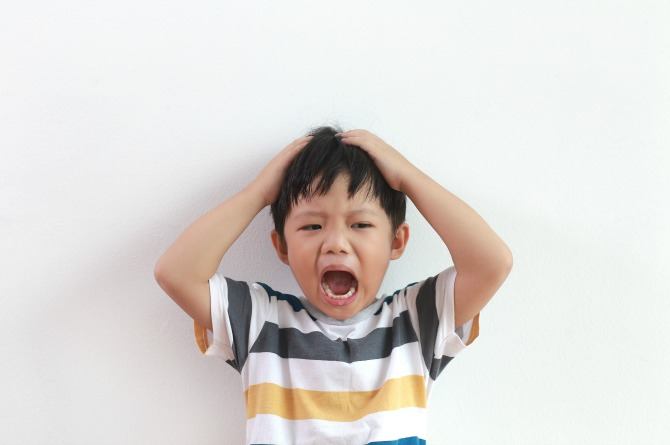
Image courtesy: Stock photo
READ MORE:
Are you at risk of overparenting your child?
Positive Parenting – One mommy shares why this approach works for her kids
10 parenting mistakes kung bakit lumalaking hindi close ang bata sa magulang
A child’s tantrums have a lot to do with anxiety. When kids get anxious, they may act out. This is accompanied by a fast heartbeat with fat and sugar rushing to the bloodstream to provide accessible energy.
Anxiety also makes our senses sharper and we tend to breathe frequently, which actually reduces the amount of carbon dioxide in the body.
Fast breathing further causes the blood pressure to drop by limiting blood flow to organs and tissues. It can also trigger panic attacks in children. That’s why kids start hyperventilating in the middle of a tantrum.
The best way to naturally reverse this process is: taking slow and deep breaths. Deep inhalation and exhalation help restore the body’s carbon dioxide levels. It also eases the body from alert mode to rest mode.
One of the most tangible ways of seeing the effects of deep breathing is anxiety reduction.
When should your child take deep breaths?
There’s no particular moment to practice deep breaths. The best time is every day and especially when your child is feeling particularly anxious.
Getting them to practice every day will only help them take the edge off when necessary. This helps children feel a sense of calm, irrespective of anxiety issues.
How to practice deep breathing?
Here’s how to do breathing exercises with kids:
- Ask your child to breathe through the nose that automatically forces them to slow down and take longer breaths
- Check if the child’s belly is contracting and enlarging as they breathe in and breathe out
- If their chest is moving, they are taking shallow breaths
For children who may have a breathing disorder like asthma, do consult your pediatrician on a more personal recommendation for breathing exercises.
You should also consult a doctor if your child is struggling to do deep breathing exercises.
How to do breathing exercises for kids: 7 practical ways to try
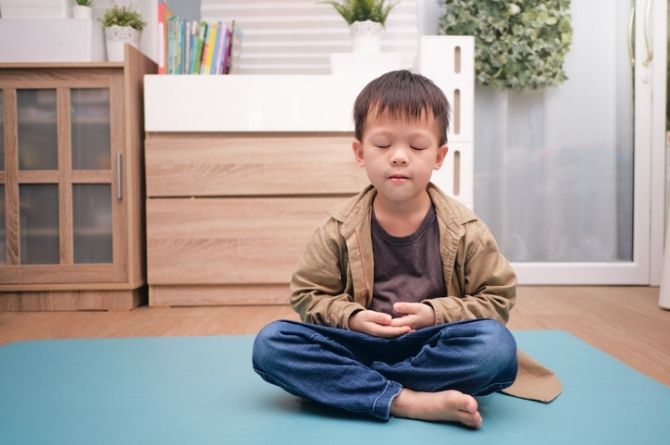
Image courtesy: iStock
While breathing is an activity we all do subconsciously, deep breathing can help children gain control and stay alert of their selves in the long run. Here are seven breathing exercises for kids you should try at home:
1. Box Breathing
- Inhale the air for four counts
- Hold the breath for four counts
- Exhale for four counts, and hold again for four more counts
2. Balloon Breathing
- Place a hand on your belly and imagine it’s a deflated balloon
- Inhale the air and it will feel like a balloon being filled with air
- Notice the belly rise
- Hold your breath for two counts and then exhale, slowly deflating the belly
3. Swimming Breathing
- Ask your child to imagine as if they are swimming underwater.
- Lift your child’s arms over their head as they inhale, as if they are coming up and out of the water for air.
- Bring your hands back to your sides and slightly behind while they exhale
4. Bumble Bee Breathing
- Inhale slowly, then exhale while making a “bzzzz” sound for as long as you can.
- You can also try Roller Coaster Breathing with the kids. Here, you ask them to hold out one hand in front of them so that they’re looking at their palm. With the other hand, trace around each finger, inhaling as they move up a finger to its tip, and exhaling as they move down a finger towards the palm.
5. Rainbow Breathing
- Ask your child to Imagine there’s a half-rainbow in front of you
- Inhale the air as the child traces their finger from left to right
- Then exhale the air as the child traces their finger from right to left
6. Fish Breathing
- Inhale the air through the nose for five seconds
- Fill the cheeks with air
- Blow the air out through the mouth
7. Bunny Breathing
- Inhale quickly three times
- Sniff like a bunny
- Then exhale in one long breath
Try these simple techniques and you’ll surely spot indifference in your child’s anxiety and overall sense of calmness.
Republished with permission from theAsianparent Singapore


 Money Tips
 Building a BakuNation
 Becoming a Parent
 Ages & Stages
 Parenting
 Health & Wellness
 Education
 Lifestyle Section
 Become a VIP
 Press Room
 TAP Recommends
 Shopping
 Rewards
 VIP Parents
