“My child can’t sit still—no focus at all!” Many families have probably said or heard this sentence at some point. A toddler who moves on to a new toy in under five minutes, or a preschooler who can’t sit still for more than two minutes before wandering off—these behaviors may lead parents to believe that “my child has no concentration.” But in truth, that might not be the case. This article explores how to improve child concentration by inviting parents to shift their perspective: mindfulness in children doesn’t have to mean staying still—it’s about the ability to focus in a way that’s age-appropriate. We’ll explore what mindfulness looks like in young children and share ways to improve child concentration without forcing them to “be still,” but instead encouraging them to “focus” in their own natural way.
A Common Misunderstanding Among Parents: “If my child can’t sit still, they must not have focus.”
In Thai culture—and many others—children who sit quietly, listen to adults for long periods, or work quietly for extended times are often seen as “good” and “focused.” Meanwhile, children who move around a lot, switch activities frequently, or resist sitting still are often labeled as having “short attention spans.” But in reality, being still isn’t a true measure of focus. The inability of young children to sit still for long periods is developmentally appropriate. Their movement is often part of their learning process and a form of concentration on things they’re interested in, in their own way. Understanding this helps reduce unrealistic expectations and opens the door for children to learn and grow at their own natural pace.
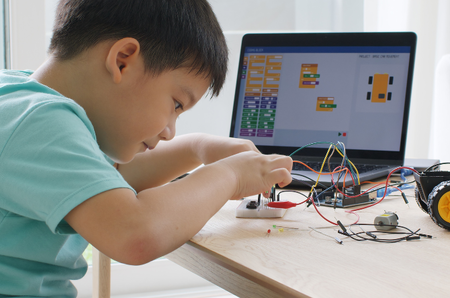
What Is Samadhi (Focus) for Children?
When we hear the word samadhi (สมาธิ), adults often imagine sitting quietly with eyes closed, focusing on the breath, or working without distraction. But for young children, samadhi — or attention span — doesn’t look like that at all.
In childhood, samadhi refers to “the ability to focus on something of interest for a period of time.” This can happen even while a child is moving — like building with blocks, role-playing, drawing, or playing with sand. A child’s version of concentration means being deeply immersed in what they’re doing, momentarily tuning out everything else, without needing to sit still at all. So, a child not staying still doesn’t mean they lack focus — it just means their focus looks different than we expect.
Childlike Concentration: Movement Can Be Focus, Too
One common misunderstanding among adults is believing that focus must be shown through “stillness.” But in reality, many young children show excellent concentration while they’re moving. For example, when a child role-plays as a shopkeeper, builds with blocks for hours, cuts paper endlessly, or rereads the same book repeatedly — all these are signs of deep focus. Even if a child is pacing, talking to themselves, or playing solo in character for hours, that’s not unusual. In fact, it might be a sign that they’re fully “in the zone” with something they care about.
If you’re wondering how to improve child concentration, understanding this natural, movement-based focus is a great place to start. Experts call it Active Attention — a type of focus expressed through movement, imagination, and hands-on activity. This form of attention is far more developmentally appropriate for young children than expecting them to sit still and listen quietly. Sometimes, when a child seems fidgety, parents might quickly assume, “My child has no focus.” But if we look closer, we might see a child who’s exploring, learning, and highly engaged — just not externally still. Recognizing that “a child’s focus can move” is key to supporting them naturally and is essential in learning how to improve child concentration in ways that truly work.
Developmental psychologist Jean Piaget explains that children between 2–6 years old learn through their senses and movement. So, young children’s focus develops through action — not stillness. Likewise, Maria Montessori, the pioneer of child-led learning, emphasized that “a child can focus deeply if something is meaningful to them.” So when a child repeats the same game or becomes absorbed in a puzzle all day, it’s not due to a lack of novelty — it’s because they are developing their attention. If you’re exploring how to improve child concentration, remember that repetitive play is not a distraction — it’s a powerful and age-appropriate way of building it.
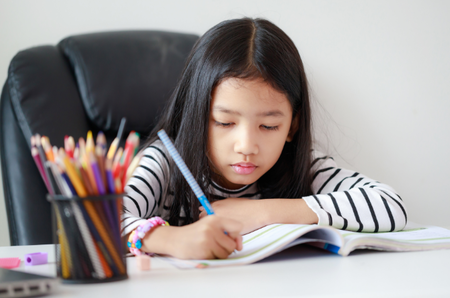
The Length of Children’s Attention Span by Age (According to Age Range)
Many parents may feel that “my child changes their mind quickly” or “they don’t stay focused on anything,” and thus conclude that their child “has no attention span.” In reality, the ability to focus in young children is naturally short. Research from Zero to Three, the CDC (Centers for Disease Control and Prevention), and child development experts has summarized the approximate attention span by age as follows:
- 1 year old: can focus for about 1–2 minutes
- 2–3 years old: 2–5 minutes
- 4–5 years old: 5–10 minutes
- 6 years old: 10–15 minutes
Note:
- These numbers are averages, not standards children “must” meet.
- Every child is different. A child who enjoys art may focus on coloring longer than peers but struggle with other tasks.
- The nature of the activity plays a big role—if it’s something the child chooses and truly enjoys, their focus tends to last longer than when they are told to do it.
What if a child changes activities too frequently?
Some parents observe that their child keeps switching toys every few minutes and can’t seem to stick to anything. Should this be a concern?
The answer is: not necessarily. At this age, rapid shifts in attention are normal. A young child’s brain is still developing its neural networks and doesn’t yet have the “filters” to manage distractions like adults do. So sounds, lights, new toys, or even someone walking by can quickly pull their attention away.
The important thing is to observe whether the child can focus on something they enjoy, even for short periods. If they return to the same activity repeatedly with joy, it indicates their attention span is developing naturally.
Does the child truly have attention deficit? Or are they just not at that developmental stage yet?
Many households mistakenly assume that if a child can’t stay still, they must have “ADHD.” In truth, a diagnosis of ADHD requires several conditions, such as persistent behaviors for over 6 months, impact on learning or relationships, and occurrences across multiple settings (e.g., at home and school). It’s not just about being “hyper” or “too energetic.”
If a child can concentrate well on something they like—like playing with blocks for a long time, understanding a story, or responding well when interested—that means their brain can focus. They just can’t yet control shifts in focus like adults, which is a normal developmental stage at this age.
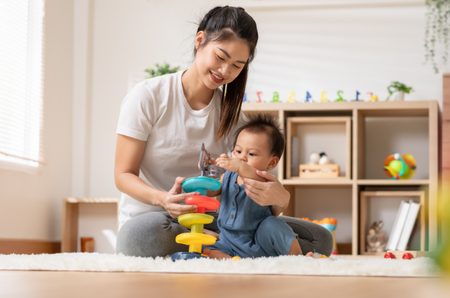
How to Support a Child’s Focus—Without Forcing Stillness
Instead of telling your child to “sit still and pay attention,” try helping them develop focus more naturally by:
- Setting short focus periods like “5 minutes of quiet” before moving to a new activity
- Letting them choose what they enjoy, such as drawing or building blocks
- Staying nearby without constantly checking in (e.g., avoiding “Aren’t you done yet?”)
- Praising their effort specifically: “I saw how focused you were while drawing.”
Praising the process rather than just the outcome helps children feel good and naturally want to stay focused more often.
Focus-Boosting Activities for Young Children
Activities that build focus don’t have to be quiet or still. Here are examples that really work:
- Music: clapping to rhythms, playing toy drums, dancing
- Art: coloring, modeling clay, cutting and pasting
- Games: memory cards, matching games, building blocks
- Nature: watering plants, collecting leaves, digging in pots
- Chores: sorting spoons, wiping tables, gathering laundry
These activities build both focus and pride, which are the foundations of lasting attention skills.
What Kind of Focus Is “Good Enough” at This Age?
You don’t need your child to sit still for an hour drawing or studying. At this age, “good enough” focus means staying engaged in something they enjoy for a few minutes at a time, and being willing to return to it with joy. Even 5–10 minutes of focused storytelling, block-building, or drawing is excellent for young children.
How Can Parents Support Their Child’s Focus?
- Reduce distractions: Turn off the TV, lower noise, minimize toy clutter
- Be present: You don’t have to teach—just sit quietly nearby
- Allow repetition: Don’t rush to switch activities
- Give intentional praise: “I saw how focused you were building those blocks!”
A child’s focus develops best in peaceful, non-judgmental moments.
Focus in young children doesn’t mean sitting still for long periods. It means having moments of full engagement in something they love, in their own way. Understanding your child’s development and respecting their nature is key. Don’t force stillness—young kids learn through movement more than silence. Let them focus their own way, and you may discover a whole new kind of concentration.
Originally published on theAsianparent Thailand


 Money Tips
 Building a BakuNation
 Becoming a Parent
 Ages & Stages
 Parenting
 Health & Wellness
 Education
 Lifestyle Section
 Become a VIP
 Press Room
 TAP Recommends
 Shopping
 Community
 Rewards
 VIP Parents
