How to Store Breast Milk: Tips to Keep Nutrients Intact for Longer Feeding
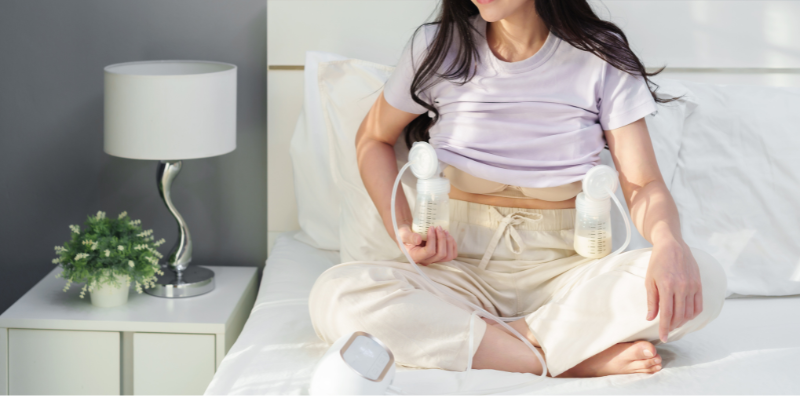
Learn how to store breast milk safely to preserve nutrients, prevent spoilage, and ensure your baby gets the best nutrition even when you're away.
Mothers know well that breast milk is the best food for newborns up to 6 months old. But for moms who need to return to work or be away from their baby, proper breast milk storage ensures the baby continues to receive all the nutrients. Today, we’ll guide you through the correct, safe, and most effective ways to store breast milk.
Talaan ng Nilalaman
Why is breast milk the best?
The World Health Organization (WHO) and UNICEF recommend exclusive breastfeeding for the first 6 months and continued breastfeeding up to 2 years with appropriate complementary foods because:
- Breast milk naturally contains complete nutrients, including proteins, fats, carbohydrates, vitamins, and minerals.
- It provides natural immunity to protect infants from infections.
- It contains DHA and ARA, which support brain and vision development.
- It is easy to digest, reducing the risk of bloating, constipation, and colic.
- It lowers the risk of sudden infant death syndrome (SIDS) and long-term risks of allergies, diabetes, and obesity.
Benefits of breast milk for mothers:
- Helps the uterus contract and recover quickly, reducing postpartum blood loss.
- Lowers the risk of breast and ovarian cancer.
- Supports faster postpartum weight loss and reduces the risk of postpartum depression through oxytocin release.
How to start storing breast milk?
Which groups of mothers should start storing breast milk? | |
| Full-time mothers | Mothers who are always with their babies but need to go out temporarily |
| working mothers | mothers who are away from their babies for 8–12 hours a day |
| mothers who are away from their babies for extended periods | such as for travel within the country or abroad, need to plan their milk storage carefully |

Golden Times for Pumping Breast Milk
-
- First week after birth
Pump for 10–15 minutes after the baby feeds to stimulate milk production. - Weeks 2–6
Focus on direct breastfeeding to best stimulate hormones.
If pumping is needed, do it alongside breastfeeding using a vacuum breast shield to collect flowing milk. - After 6 weeks
As the baby starts longer sleep cycles, mothers can schedule pumping more systematically, for example, every 3 hours.
- First week after birth
Popular Breast Milk Pumping Schedule
Breast Milk Pumping Plans | วิธี |
| Plan 1 | Pump immediately 10–15 minutes after the baby finishes feeding |
| Plan 2 | Pump between feeds, leaving a 1-hour gap from breastfeeding |
| Plan 3 | |
Consistently pumping 8–10 times per day in the early stages will help noticeably increase milk supply within 1–2 weeks.
How to Store Breast Milk Safely While Preserving Its Nutritional Value
Temperature | Storage Duration |
| Room temperature (>25°C) | 1 hour |
| Room temperature (>25°C) | 4 hours |
| Ice pack/cooler (<15°C) | 24 hours |
| Refrigerator (4°C) | 4 days |
| Freezer (single-door fridge) | 2 weeks |
| Freezer (separate-door fridge) | 3 months |
| Deep freezer (-18°C) | 6 months |

Warming and Handling Stored Breast Milk
-
Thawing: Move frozen milk to the regular fridge for 12 hours.
-
Warming: Place in warm water (≤40°C) before feeding. Do not use a microwave, as it destroys important nutrients.
-
Do not refreeze milk once thawed.
-
Leftover milk: Discard within 2 hours after feeding, as it may be contaminated with bacteria from the baby’s mouth.
Dealing with Rancid Smell from Stored Milk
-
Rancid odor comes from the enzyme lipase, which breaks down fat in some breast milk.
-
Milk with a rancid smell is still safe, though some babies may refuse it.
-
Solutions:
-
Mix older milk with fresh milk.
-
Briefly heat to 82°C to stop enzyme activity.
-
-
La Leche League recommends storing milk in airtight containers, preferably glass if rancid smell persists.
Tips for Long-Lasting, Fresh Storage
-
Wash and sterilize equipment before every use.
-
Remove as much air as possible from storage bags.
-
Freeze milk immediately within 1 hour of expressing.
-
Avoid storing near strong-smelling foods.
-
Don’t place milk bags against the walls of freezers with auto-defrost systems.
Originally published on theAsianparent Thailand