TAP top app download banner
theAsianparent Philippines Logo
EnglishFilipino
Product Guide
Sign in
  • Money Tips
    • Savings
    • Insurance
    • Loans
    • Investments
    • Government Benefits
  • Building a BakuNation
  • Becoming a Parent
    • Trying to Conceive
    • Pregnancy
    • Delivery
    • Losing a Baby
    • Project Sidekicks
  • Ages & Stages
    • Baby
    • Toddler Years
    • Preschool Age
    • Kids
    • Preteen & Teen
  • Parenting
    • Parent's Guide
    • News
    • Relationship & Sex
  • Health & Wellness
    • Diseases & Injuries
    • Allergies & Conditions
    • Vaccinations
    • COVID-19
  • Education
    • Preschool
    • K-12
    • Special Education Needs
  • Lifestyle Section
    • Celebrities
    • Contests & Promotions
    • Home
    • Travel and Leisure
    • Fashion
    • Fitness
    • Wellness
    • Money
  • Become a VIP
  • Press Room
  • TAP Recommends
  • Shopping

5 Ways to Raise a Child with Empathy and Inner Beauty That Everyone Loves Wherever They Go

8 min read
5 Ways to Raise a Child with Empathy and Inner Beauty That Everyone Loves Wherever They Go

Teaching empathy isn’t about lectures—it’s about how you live. From how you say sorry to how you treat strangers, your child is always watching. Here’s how to teach empathy to kids in the most powerful way: by being the example.

How to teach empathy to kids starts with being a role model they can genuinely feel—not just instruct. This article explores practical ways to nurture empathy in children so they grow up kind, compassionate, and beloved wherever they go.

When “Empathy” Is Misunderstood

In a fast-paced, competitive world, many families unintentionally prioritize strength, intelligence, or self-interest over empathy. Many parents want to raise kind, empathetic children—but end up using the wrong approach, such as commanding them to help others or scolding them for being selfish. When exploring how to teach empathy to kids, what’s often forgotten is this: a child can only show empathy if they’ve first received understanding themselves.

What Is Empathy? (Empathy vs Sympathy)

Empathy is the ability to understand and genuinely feel with someone else—knowing how they feel and connecting to it. It’s different from sympathy, which is feeling for someone from a distance.

For example:

  • Sympathy: “Oh no, poor thing.”
  • Empathy: “I can really imagine how hard that must have been for you.”

For children, empathy is more than teaching them to say “sorry”—it’s helping them truly recognize and care about others’ feelings.

According to research from Harvard’s Making Caring Common Project, children who consistently receive empathy from their parents are more likely to show kindness and help others—compared to those taught to “be nice” through commands or forced behavior.

Are Children Born with Empathy?

A common question is: “Young kids don’t even understand much yet—how can they be empathetic?” In reality, children are born with the capacity for empathy, and it can develop strongly during the early years—especially before age 6. That’s why understanding how to teach empathy to kids from a young age is so important.

A University of Washington study (2014) found that children as young as 18 months can recognize others’ emotions and even try to help when someone is struggling.

Empathy-related brain systems, like mirror neurons, are active from a young age. Children naturally imitate facial expressions, gestures, and emotions of adults—often without realizing it.

This means your child is learning empathy from everything you do, not just what you say. Learning how to teach empathy to kids early helps ensure that what they absorb from you turns into lifelong compassion.
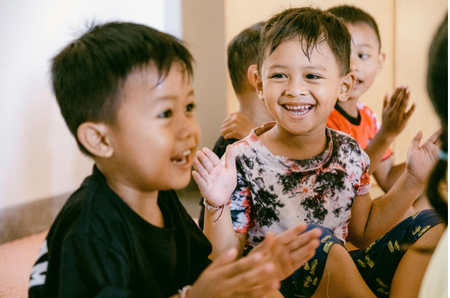
how to teach empathy to kids

5 Ways to Raise a Compassionate Child

  1. Listen More Than You Think You Need To

A child who knows their parents truly listen to them feels that their emotions are valued. And that’s exactly what helps them learn to listen to others in the future. Listen without interrupting, correcting, or rushing to teach—just be there with your child’s emotions. For example:

  • “You’re feeling sad, huh? No one asked you to play today.” Show your child you acknowledge their loneliness, without rushing to comfort or say “It’s okay.”
  • “You’re really angry, aren’t you? Your sibling took the toy even though you weren’t done playing.” Instead of saying “Don’t be mad,” help your child name and accept the feeling.
  • “I heard you say you don’t want to go to school… something must be bothering you, right?” Open up space to listen without forcing them to get up and go.
  • “I understand—you’re tired and want to stay with me a bit longer.” Acknowledge your child’s need for connection, even in moments of separation.
  • “You might feel like you did something wrong… but I’m still here if you want to talk when you’re ready.” Leave room for your child to express themselves in their own time, without pressure or threats.
  1. Reflect Their Feelings Instead of Telling Them to Stop Crying

“Don’t cry” or “It’s not a big deal” are phrases that can diminish a child’s capacity for empathy. Instead of suppressing emotions, we can validate their feelings so they learn every emotion has a place. For example:

  • “I know you’re really upset because you worked so hard on that drawing and it got spilled on.” Acknowledge their sadness and effort, instead of just saying, “You can draw another one.”
  • “I understand—you’re frustrated that you have to stop playing when you were having so much fun.” Instead of “It’s nothing, why are you fussing?” choose to see it from their point of view first.
  • “I hear you—you’re upset your sibling didn’t share snacks even though you shared first.” Reflect the feeling of unfairness without rushing to teach them to “be generous.”
  • “I see how scared you are of the thunder right now.” Instead of “There’s nothing to be scared of,” acknowledging fear often helps children calm down faster.
  • “You must feel really embarrassed being teased in front of everyone.” Instead of “No need to be embarrassed,” choose to stand beside their feelings first.

how to teach empathy to kids

  1. Talk About Emotions in Everyday Life

Teach vocabulary for emotions through real-life situations, such as:

“You’re excited, aren’t you? You get to go on a trip with your friends tomorrow!” This helps children understand the word excited by linking it to a happy experience.

“You’re really disappointed, aren’t you? It’s raining so you can’t ride your bike.” Disappointed is a common feeling that children need to learn to name and understand.

“You’re proud of yourself for putting away all your toys, right?” This is a great chance to introduce the word proud while also boosting self-esteem.

“You’re feeling jealous, aren’t you? Because your brother got a new toy.” Teach the word jealous without judgment—just as something to recognize and understand.

“You’re feeling bored, right? You’ve been waiting for Mommy to finish work for a long time.” Young kids often don’t know the word bored, and might act out instead. Naming it helps them express it more clearly.

Research from the Yale Center for Emotional Intelligence shows that children who can identify and understand emotions are better at managing their feelings and navigating social situations.

  1. Use Books, Stories, and Movies as Tools for the Heart

Ask reflective questions after reading stories, like: “Do you think the turtle felt sad when others made fun of how slow he was?” or “How do you think the bear felt when his friends didn’t invite him to play?” These kinds of questions help children see the world through another’s eyes—the essence of empathy.

Psychologist Paul Zak (Claremont Graduate University) notes that emotionally stirring stories stimulate the release of oxytocin, a hormone linked to empathy.

Recommended children’s books that nurture empathy:

  • When War Comes – Sandclock Books
  • The Lost Bear – Amarin Kids
  • The Boy with Flowers for Hair – Amarin Kids
  1. Model Empathy in Daily Life

Children don’t learn from instructions—they learn from what parents do. For those wondering how to teach empathy to kids, the answer lies in everyday moments: saying thank you to the delivery person, apologizing when we make a mistake, or showing care when our partner is tired.

Partner Stories
New to the Mom Game? Celebrate Mother's Day with These Awesome Deals and Activities
Parents, here's what you should do when your child sees you and your spouse fighting
#SendLoveWithBebeBata
13 Must-haves for Your Online Baby Checkout Checklist

Speak gently to grandparents even when they repeat themselves. Your child learns that patience and respect for the vulnerable are signs of understanding and compassion.

Ask the delivery person, “Has it been a tiring day?” and offer a sincere thank you. Your child sees that empathy extends beyond the family—to strangers, too.

When someone is struggling—tripping, carrying heavy things—step in to help right away. Your child will learn: “If someone’s in trouble, I can help—even if they don’t ask.”

Say to your child, “I was too harsh earlier. I’m sorry. I’ll try to stay calm next time.” This teaches that everyone makes mistakes, and real courage lies in a sincere apology.

Show care toward your partner: “You look tired. Why don’t you rest while I take care of the kids for a bit?” Your child will witness a relationship rooted in support, not just shared duties.

If you’re reflecting on how to teach empathy to kids, remember: these small daily actions become lifelong lessons that shape who your child becomes.

how to teach empathy to kids

What Happens When a Child Doesn’t Receive Empathy

When a child doesn’t receive empathy… they are more likely to close off than open up.

Upbringing filled with blame, scolding, spanking, or comparison causes children to develop emotional armor to protect themselves and become less receptive to others’ feelings.

Dr. Becky Kennedy (Good Inside) says, “Children who are understood by adults can accept and understand other people’s emotions.” On the other hand, if a child has never been understood, they will not be able to understand others either.

Don’t measure the success of empathy by whether your child says “sorry” in front of others

Many times, parents force their children to “say sorry” even when the child doesn’t understand why.

An apology without heart is merely politeness. Empathy that stems from genuine understanding is the foundation of lifelong healthy relationships.

Carol Dweck (Stanford University) noted that teaching ethics and empathy should focus on the “thinking and feeling process,” not just on outcomes or external actions.

What a child sees and feels from their parents every day is their best teacher

Want your child to be kind? Have you shown them compassion today?
Want your child to be a good listener? Did you truly listen to them today without interrupting?
Want your child to understand others? Have you made them feel understood first?

Because in the end… empathy doesn’t grow from instruction. It flourishes in the heart of a child who has felt understood by a loving adult.

Originally published on theAsianparent Thailand

Got a parenting concern? Read articles or ask away and get instant answers on our app. Download theAsianparent Community on iOS or Android now!

img
Written by

The Asian Parent

Become a Contributor

  • Home
  • /
  • Parenting
  • /
  • 5 Ways to Raise a Child with Empathy and Inner Beauty That Everyone Loves Wherever They Go
Share:
  • "I'm Glad You Shared That": A Simple Phrase That Can Change Your Child's Life Through the Power of Non-Judgmental Listening

    "I'm Glad You Shared That": A Simple Phrase That Can Change Your Child's Life Through the Power of Non-Judgmental Listening

  • How to Communicate with a 2-Year-Old During Tantrums and Meltdowns That Give Moms a Headache

    How to Communicate with a 2-Year-Old During Tantrums and Meltdowns That Give Moms a Headache

  • Teaching Kids to Learn from Problems: 10 Everyday Situations as Examples

    Teaching Kids to Learn from Problems: 10 Everyday Situations as Examples

  • "I'm Glad You Shared That": A Simple Phrase That Can Change Your Child's Life Through the Power of Non-Judgmental Listening

    "I'm Glad You Shared That": A Simple Phrase That Can Change Your Child's Life Through the Power of Non-Judgmental Listening

  • How to Communicate with a 2-Year-Old During Tantrums and Meltdowns That Give Moms a Headache

    How to Communicate with a 2-Year-Old During Tantrums and Meltdowns That Give Moms a Headache

  • Teaching Kids to Learn from Problems: 10 Everyday Situations as Examples

    Teaching Kids to Learn from Problems: 10 Everyday Situations as Examples

Get advice on your pregnancy and growing baby. Sign up for our newsletter
  • Money Tips
  • Building a BakuNation
  • Pregnancy
  • Parenting
  • Lifestyle Section
  • FAMILY & HOME
  • TAP Community
  • Advertise With Us
  • Contact Us
  • Become a Contributor


  • Singapore flag Singapore
  • Thailand flag Thailand
  • Indonesia flag Indonesia
  • Philippines flag Philippines
  • Malaysia flag Malaysia
  • Vietnam flag Vietnam
© Copyright theAsianparent 2026. All rights reserved
About Us|Team|Privacy Policy|Terms of Use |Sitemap HTML
  • Tools
  • Articles
  • Feed
  • Poll

We use cookies to ensure you get the best experience. Learn MoreOk, Got it

We use cookies to ensure you get the best experience. Learn MoreOk, Got it