Inner child healing and parenthood are deeply intertwined. As we step into the role of a parent, we are often met with parts of ourselves we thought we had left behind—especially the silent, wounded parts of our inner child. What we don’t heal tends to resurface, not only in how we love, but also in how we hurt.
This reflection is a tender look into the life of a father whose anger stems from unspoken pain. It is an invitation to witness how buried childhood wounds can echo through generations, and how acknowledgment—more than perfection—can begin the journey of breaking the cycle.
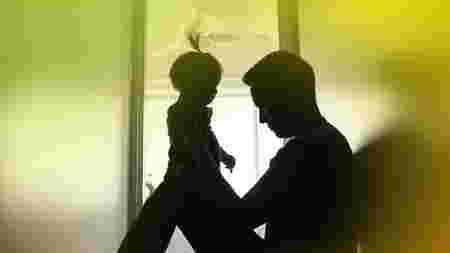
Image from Canva
Healing the Inner Child and Parenthood: A Reflection
I know a man who is now a father— a man who grew up with a sporadic father.
He was born to a woman who didn’t know that the man who got her pregnant was already married. And so, from the beginning, he grew up mostly alone.
As a child, he sold cigarettes and candies on the street just to help his mother keep them afloat.
Life was never easy.
When he started his own family in his early 20s, the weight of survival remained heavy on his shoulders.
And maybe—just maybe—the burden of poverty and the cries of his wounded inner child danced together in a chaotic symphony inside him. It was a noise no one could hear, but one that echoed through his every decision. And unfortunately, many of those decisions harmed the people he loved the most.
To many, he was known for being funny. But he was equally known for having explosive anger.
While trying to understand him better—while also navigating my own inner child healing—I learned something that made everything click:
His anger is not just anger. It is the child in him begging for attention.
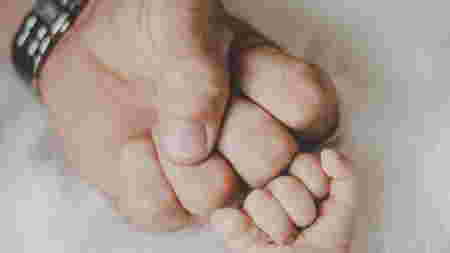
Image from Canva
I saw it clearly each time he made a mistake that affected his family. Instead of offering a sincere apology, he would begin with the same line:
“Okay, it’s my fault. It’s always my fault. But you know? I have never been that angry at my father, even though he had a lot of shortcomings.”
There. Right there. That’s where the root lies.
A child who, all his life—even until his father died—never had the chance to say, “You hurt me.”
A boy who never found the courage or the space to admit he was jealous of his half-siblings. Jealous of the way they were cradled by the same arms that were supposed to be holding him too.
A boy who had to swallow the pain of losing not just a father, but even his name—because his father gave it instead to his legal son.
A boy who memorized the noises of the street—not because he was playing—but because survival demanded his entire childhood.
And so the anger he was never allowed to express toward his father, he projected onto his wife and children.
When I observe him from a distance, I often think:
If only he could admit that he was hurt. If only he could say that the life he’s carried was too heavy, and that it made him bitter, not because he wanted to be—but because no one ever helped him hold it.
Not to blame his father. Not to resent him. But simply to say:
“Those days hurt me. I should have been angry. I should have said I was jealous. I wanted what they had.”
I believe that if he could admit that, he would become the sweetest, most charming dad I’ll ever know.
Because in the admission of pain begins the path to healing.

Image from Canva
There is nothing wrong with acknowledging that our parents hurt us. It doesn’t mean we love them less. It’s not an act of disrespect. If anything, it’s the first act of liberation—for both us and them.
We free ourselves from the grip of generational pain that no one truly wanted. Because at the core, no one is really at fault. But someone has to be brave enough to say:
“I’m hurting. And I don’t want to pass this on anymore.”
The journey back to wholeness begins with healing the inner child. And that’s not just about buying yourself toys you never had, or giving yourself experiences you missed out on.
It’s about reparenting that child. Sitting with them in the dark corners of your heart. Asking, “Where does it hurt?” Because only then can we know how to help.
Take off the worn-out bandages. Let the wound breathe. Tend to it intentionally, so you don’t bleed on the people who never hurt you.
And slowly, day by day, create space for that child within you to feel safe, seen, and soft again.
Because healing isn’t about changing the past. It’s about finally giving your younger self the love they always deserved.


 Money Tips
 Building a BakuNation
 Becoming a Parent
 Ages & Stages
 Parenting
 Health & Wellness
 Education
 Lifestyle Section
 Become a VIP
 Press Room
 TAP Recommends
 Shopping
 Community
 Rewards
