Check for signs of risk! Pseudo-autism. Fix it quickly before it becomes a threat to your child's development.
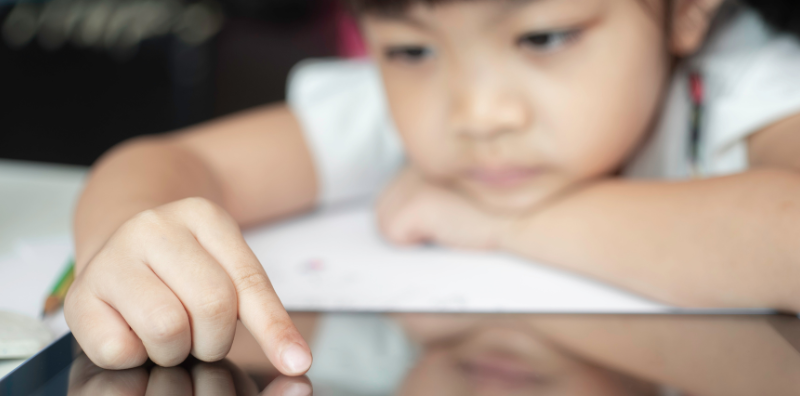
Your child's development and growth are important and must be taken care of and promoted. Therefore, if your child is slow to speak or is obsessive, don't be complacent, as this could lead to the development of pseudo-autism.
A child’s early development is crucial, especially when it comes to speech and communication. These are crucial expressions for connecting with the outside world and developing the ability to learn new things. Therefore, any home that finds that their child is slow to speak or exhibits behaviors that are unlike typical children, such as being overly preoccupied with one thing, having strange gestures or actions, or being unable to express feelings appropriately, must be careful, as these could be signs of pseudo-autism , which poses a threat to their development.
Talaan ng Nilalaman
What is “autism”?
Before we get to know about “pseudo-autism,” I’d like parents to understand ” true autism. ” True autism is caused by genetics or brain abnormalities. Symptoms of true autism in children include the following three developmental problems:
- Speech and communication development , such as children speaking slowly or not speaking, speaking strange or alien languages, not pointing out things they are interested in or wanting, and not being able to follow orders.
- Social development , such as children living in their own world, showing little interest in their surroundings, not turning when called, not making eye contact, not paying attention to those around them, being indifferent, emotionless, and not empathizing when others are happy or sad.
- Development of play skills such as repetitive play, not knowing how to play, obsessive interest in something, liking to play alone, not interested in playing with friends, unable to play according to the rules.
In addition, children with true autism may also experience other symptoms, such as hyperactivity, hyperactivity, restlessness, aggression, violent temperament, head banging, hand flapping, and body spinning. Approximately 70% of children with true autism are found to be hyperactive, and 50-70% have intellectual disabilities. Meanwhile, approximately 10% of children with true autism have other special abilities.
Make sure ! Does your child have autism? | |
| age | symptom |
| 6 months |
|
| 9 months |
|
| 12 months |
|
| 18 months |
|
What is pseudo-autism ?
Pseudo-autism is a behavioral manifestation or some symptoms in children that are similar to autism. Statistics have shown that Thai children are increasingly suffering from pseudo-autism. The cause is not genetics or brain abnormalities like true autism, but may be due to many factors, especially inappropriate upbringing, which causes children to have developmental and behavioral problems, as well as stress from the environment.
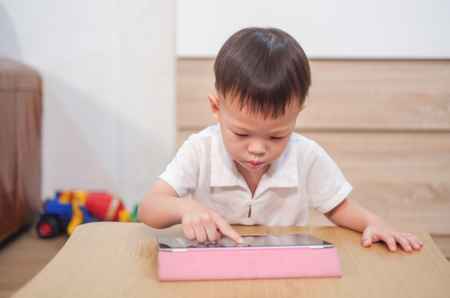
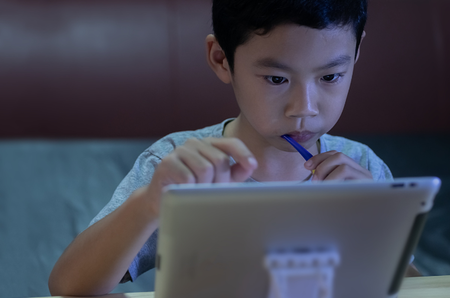
Children with pseudo-autism may have difficulties with speech, communication, and interaction with others. This is because pseudo-autism is a condition characterized by a lack of stimulation in two-way communication, leading to delays in communication development and abnormal social development, often resulting in a lack of conversation or interaction with others. This is often the result of parents neglecting to talk or play with their children, leaving them in front of screens of communication devices like tablets and smartphones. This results in children receiving only one-way communication.
This kind of upbringing puts your child at risk of becoming autistic !
- Parents who use technology in raising their children, leaving their children with too much mobile phones or other screens.
- Parents are very considerate and dote on their children, doing almost everything without training them to help themselves.
- Parents are anxious and forbidding, not allowing their children to do anything or learn on their own. They often say things like, “Don’t touch me! Don’t! I’ll do it for you!”
- Busy parents are so busy that they have little time to talk or play with their children.
- Parents who rarely invite their children to play outside the home cause their children to not know how to socialize, interact with others, and not have the opportunity to learn how to live in society with peers of the same age.
As you can see, using the above methods too often or too often not only doesn’t stimulate your child’s development, it also risks causing your child to develop more slowly than they should, potentially leading to a child with pseudo-autism.
Symptoms like this are a sign that your child is at risk of having pseudo-autism !
As mentioned, pseudo-autism has very similar symptoms to true autism, and some symptoms may differ in each child depending on the parenting style and caregiver. However, the first symptoms parents will notice are delayed speech and obsessive behaviors, especially during the early stages of learning. Here are some symptoms that can be considered “pseudo-autism”:
-
Symptoms and communication behaviors
- Your child speaks later than other children of the same age, or does not speak, speaks in cartoon language or repeats speech without understanding the meaning, speaks in a foreign language, repeats speech, speaks like a song, recites lyrics and letters but does not understand the meaning.
- I don’t understand commands or words very well.
- Unable to express one’s own needs, expressing oneself differently from other children of the same age, such as crying and being cranky without reason, or having violent behavior when not getting what one wants, throwing tantrums, and throwing tantrums.
-
Social symptoms and behaviors
- Called but no one turned, no eye contact, no interest in anyone.
- Do not show emotions or feelings when interacting with others.
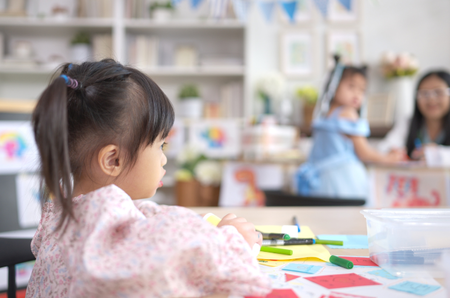
- Has little interest in children of the same age and is not good at playing with others because he does not interact with his caregiver or other people.
-
Obsessive behavior
- Playing with toys in the same way or having unusual play behaviors, preferring to play alone and not interacting with peers of the same age.
- Addicted to communication devices such as tablets and smartphones, ignoring other activities
- Doing something repetitively, in a pattern, inflexible, obsessively interested in something.
Parents will be able to more clearly observe the symptoms of children with pseudo-autism around the age of 2 years.

How to prevent pseudo-autism in your child
Pseudo-autism should be prevented from the beginning, as it can help children develop speech, communication, and a better understanding of the outside world. If not properly cared for and addressed, it can affect learning and social skill development, leading to further problems in the future. Here are some ways to prevent pseudo-autism in your child:
-
Avoid all screen media in children under 2 years of age.
If the child is over 2 years old, they may be allowed to watch screens for no more than 1 hour per day, and it should be done together with their parents, divided into periods. Importantly, the screen must not be used as a condition for the child to do things, such as watching screens while eating.
-
Spend more time and play with your child.
Playing with your child will help create two-way communication. Give your child the opportunity to express their opinions during play by training them to look you in the eye when talking, such as by role-playing as a teacher or a little shopkeeper. Let your child exercise regularly.
-
Provide opportunities to play with children of the same age.
To help your child learn to socialize independently and get regular exercise, around 30 minutes a day, you might start by going for a walk outside, greeting neighbors, or playing in a playground for children of the same age.
-
Train your child to help themselves.
It’s something you can do from a young age, like eating by yourself. It’s okay if you spill something. When you’re young, your mother cleans up after you, but you have to gradually teach your child how to clean up after themselves as they grow up. They can wash their own hands, brush their teeth, get dressed, or do other daily activities by themselves. These things not only help develop their muscles, but also their brain development through planning and organizing things step by step.
-
Consult an expert
If you notice unusual behavior or suspect that your child is at risk for pseudo-autism, you should consult a child development specialist or child psychiatrist for diagnosis and appropriate treatment as soon as possible.

Pseudo-autism is caused by environmental factors. Therefore, if your child receives proper care and consistent developmental stimulation from their parents, the symptoms of pseudo-autism will gradually improve and eventually disappear.
Republished with permission from theAsianParent Thailand