In today’s urban society, many families—especially new parents—face space limitations. The large detached houses of previous generations are now often replaced by condominiums or small townhouses. Raising children in a small house of just 25–40 square meters means parents must find creative ways to share and maximize living space.
When a child arrives, one of the biggest concerns for many parents becomes: how to raise children in a small house while giving them enough play space. Play is crucial for children’s all-round development. However, the truth is that the size of the house does not always determine the quality of life for the child. What matters most is the smart allocation of space and choosing age-appropriate activities.
This article will help parents understand why play space is important, along with practical approaches and ideas for organizing the home so children can play freely—even within limited space.
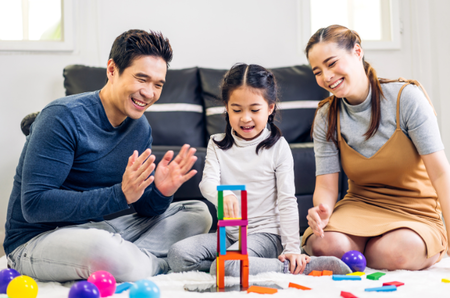
Small House Parenting: Why “Play Space” Matters for Children
Physical Development: Growing Strong and Healthy
Play space allows children to move freely—crawling, walking, running, jumping, or climbing. These activities strengthen gross motor skills and body coordination, such as balance and hand–eye coordination. For example, a child with a small climbing corner at home can practice going up and down small wooden steps, helping strengthen and stabilize their legs.
Fine Motor Skills and Precise Hand Movements
When raising children in a small house, creating play areas with activities involving grasping—like building blocks, drawing, or molding clay—helps children develop fine motor skills, which are essential for writing and future tasks. Even in limited space, raising children in a small house can be enriching; for example, a child who spends 15 minutes a day building Lego on a small table can improve both hand precision and creativity.
Stimulating Learning and Brain Connections
Play encourages the brain to form new neural pathways. Children who explore, experiment, and use imagination in their play areas develop stronger analytical and problem-solving skills. For example, a role-play corner in a small house—where a child plays doctor or chef, using just a towel as an apron—allows them to practice thinking and managing different situations.
Supporting Emotional and Social Development
Play areas teach children patience, sharing, and problem-solving with others. Playing with parents or siblings in small spaces trains children to understand shared space, respect rules, and adapt to limitations.
Challenges of Raising Children in a Small House
Limited Space Without Clear Zones
Small homes or condos often lack separate living rooms, forcing shared use of one area for eating, sleeping, and playing. For example, a living room may serve as a play area during the day but must be cleared at night for sleeping.
Noise and Disturbance to Neighbors
In attached homes or condos, children’s activities like jumping, running, or banging toys may disturb others. Parents need strategies to reduce noise, such as using thick mats.
Increased Safety Concerns
Narrow spaces bring furniture, sharp objects, or electrical outlets closer to children. Parents must plan storage carefully to ensure safety.
Clutter Accumulates Easily
Small homes have limited storage space, so just a few toys can make the house look messy. Rotating toys and teaching children to clean up from an early age helps manage clutter.
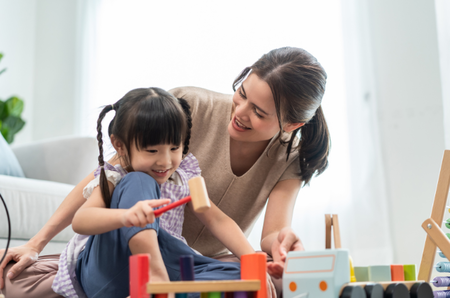
Principles for Organizing Play Space in a Small Home for Maximum Benefit
Make the Most of Vertical Space
Install shelves that reach the ceiling or use hanging wall organizers for storing small toys, increasing storage without taking up floor space. For example, one family installed a wooden shelf above the door to store rarely used toys, which made the floor area much more open.
Choose Multipurpose Furniture
Use furniture that can serve multiple functions, such as a foldable wall-mounted table that works as both a dining table and an activity table, or a bed with drawers underneath for storage.
Movable Play Areas
Use foldable play mats or lightweight playpens that can be moved to different rooms as needed.
Use Color and Lighting to Make the Home Feel Bigger
Choose light color tones and allow natural light in, or use warm-toned lighting to create an airy atmosphere. For example, one family painted the playroom walls cream white and installed mirrors to reflect light, making the room appear more spacious.
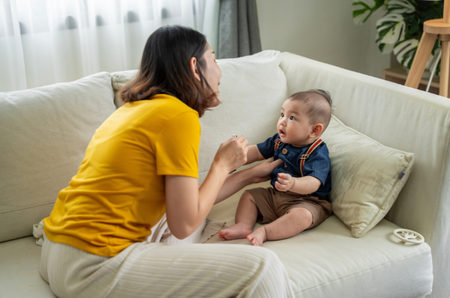
Techniques to Support Child Development and Care
Divide Small Spaces into Purposeful “Corners”
Even in limited space, parents can create an environment that nurtures a child’s growth and learning in physical, emotional, and social aspects. One effective method is dividing areas into corners:
-
Creative Corner: a box of art supplies within easy reach, along with a small table for drawing or crafts, stimulating creativity and fine motor skills.
-
Movement Corner: just a few square meters for kids’ yoga, dancing, or simple exercise games to develop gross motor skills and agility.
-
Calm Corner: a storytelling nook with pillows and blankets, helping children practice emotional regulation and relaxation.
Parents’ Participation Matters
Parents’ roles are crucial in small homes. Playing with children attentively—without distractions like mobile phones—makes shared time meaningful and strengthens bonds. Home activities such as baking, arts and crafts, or role-playing teach life skills in fun ways. When parents add expressions, tone, and gestures, children also practice language and imagination more effectively.
Safety Comes First
In small spaces, safety requires extra care. Furniture corners should be covered with bumpers, all outlets should have covers, and sharp objects or chemicals must be stored out of reach. If the floor is slippery, use rugs or mats to minimize risks.
Include Regular Outdoor Activities
Even with a well-arranged home, children still need outdoor play for physical growth and sunlight exposure. Take them to parks or playgrounds at least 2–3 times a week. Simple activities like biking, playing ball, or running help them exercise fully and absorb morning sunlight, which provides vitamin D for strong bones and immunity.
A small home is not an obstacle to a child’s development. With smart space planning and appropriate activities, every square meter can become a nurturing and joyful environment. “How to raise children in a small house” is not a difficult question when approached with creativity and mindful attention to every shared moment.
Originally published on theAsianparent Thailand


 Money Tips
 Building a BakuNation
 Becoming a Parent
 Ages & Stages
 Parenting
 Health & Wellness
 Education
 Lifestyle Section
 Become a VIP
 Shopping
 Rewards
 VIP Parents
