Stop Comparing Your Child to Others: Every Child Grows in Their Own Time
“Why isn’t my child speaking yet, while the neighbor’s kid is already fluent?”
“Their child started walking at 10 months—mine is over a year old and still not walking.”
These questions aren’t wrong. All parents care deeply and want to see their children thrive. But even with the best intentions, such comparisons can carry hidden expectations that unintentionally hurt a child’s tender heart.
This article invites parents to shift their perspective: raising children is not a race, and child development is not a straight line that everyone follows the same way. We’ll explore how to nurture your child’s confidence and growth without the need for comparisons.
Understanding Child Development: Every Child Is Unique
Child development varies widely. Some children speak early, while others don’t say their first sentence until nearly age two. Some are running around in their first year, while others still prefer crawling.
According to UNICEF and the World Health Organization (WHO), child development is divided into four main domains:
- Physical Development: such as walking, crawling, grasping objects
- Language Development: such as speaking, listening, following commands
- Social and Emotional Development: such as playing with others and recognizing their own emotions
- Cognitive Development: such as problem-solving and creativity
The most important thing to remember is: “Every child has their own rhythm.” We should never rush a child to do things before they’re ready—and especially not compare them to others. It simply isn’t fair to them.

7 Reasons Why Parents Should Stop Comparing Their Child to Others
Comparing your child to others doesn’t help them develop faster—it often creates emotional wounds that may last a lifetime. Here are seven ways comparisons can negatively affect your child’s well-being and growth:
1. It Destroys Their Self-Confidence
When a child constantly hears, “Why aren’t you as good as them?” they begin to feel, “I’m not enough.” Bit by bit, their self-confidence fades.
A study by Harvard University found that children who are frequently criticized or compared tend to have lower self-esteem and are more afraid to try new things.
2. They Grow Up Afraid to Express Themselves
Children who feel like they never please their parents often become afraid to speak up or think independently. They fear being wrong or “not good enough,” and this lack of self-expression can affect their future—at school, work, and in relationships.
3. They May Feel Envy or Resentment Toward Others
Parents may not realize that using “the neighbor’s kid” as an example can cause their child to feel envious or even hateful toward that peer. This isn’t just a childhood issue—it can hinder the child’s social development and ability to build healthy relationships later on.
4. It Causes Stress—Even in Preschool Years
Research from Tokyo University found that children aged 4–6 who were frequently compared had higher levels of cortisol, the stress hormone. This affects the hippocampus, the part of the brain tied to memory and emotional regulation.
5. They Stop Valuing Themselves
When parents repeatedly say things like “That’s not good enough,” children begin to believe it. Over time, this forms a mental image that they are worthless, no matter what they do—leading to adulthood struggles with self-love and self-worth.
6. They Communicate Less with Their Parents
Some children begin withdrawing from their parents, avoiding conversations out of fear of being compared again. Eventually, this builds an emotional wall that makes it harder for parents to understand their child.
7. They Grow Up Comparing Others
Children who are raised with constant comparisons often adopt this pattern themselves. As adults, they may compare their partners, friends, or even their own children—passing on an unhealthy cycle that brings no joy to anyone.
The takeaway: Every child is unique. Supporting them with love, patience, and acceptance builds not only their confidence—but also a deeper, healthier bond between parent and child.

Warning Signs You Might Be Comparing Your Child Without Realizing It
Many parents don’t intend to compare their child to others—but some seemingly harmless comments can leave emotional scars, such as:
- “Look, your friend can already read. Why can’t you?”
- “I noticed that kid is more confident than you.”
- “My friend’s child ranked first in class—why are you still addicted to games?”
Even if these words are spoken with good intentions, to a child they may sound like: “You’re not good enough.”
This can lead to feelings of inadequacy far deeper than we realize.
What You’ll See When You Stop Comparing Your Child
Once you consciously stop comparing your child to others, you’ll start noticing their growth in more meaningful ways:
- You’ll see their effort, not just the outcome
- You’ll see that they are learning in their own way, not based on your expectations
- You’ll realize that even if they’re slower, they are still growing beautifully—in their own time
Raising a child is like growing a tree of a unique species.
Some trees grow fast, some bloom later—but each one has its own beauty, in its own perfect season.
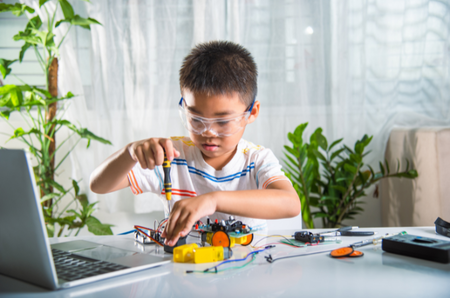
5 Ways to Support Your Child’s Growth—Without Comparing Them to Anyone
Instead of telling your child to “be like them” or “achieve like someone else,” here are five empowering ways to nurture your child’s growth and confidence in their own unique path—no comparisons needed.
1. Replace “Why aren’t you like…” with “I’m proud of your effort”
Positive words from parents are a powerful force for growth. Children don’t need criticism—they need acceptance for who they are. When they feel safe from comparison, they’ll be more willing to step into the world and grow confidently.
Instead of:
“Look at that kid—they’re so brave. Why can’t you be like that?”
Try:
“I saw how well you listened. Next time, you can try speaking too. I believe in you.”
2. Focus on the Process, Not Just the Outcome
When a child hears:
“Great job! I saw how hard you practiced all week,” they learn that effort is valuable, not just the result. Praising effort helps children become more resilient—they won’t fear failure, and they’ll embrace learning without comparing themselves to others.
3. Notice Your Child’s Unique Strengths
Every child has their own gifts. One may struggle with math but be brilliant at drawing. Another might not love academics but captivate friends with storytelling.
Instead of asking:
“Are you doing as well as others?”
Try asking:
“What do you enjoy? What are you good at? How can I support you?”
4. Use the Concept of “Multiple Intelligences”
American psychologist Dr. Howard Gardner introduced the idea that intelligence is not limited to math and language. There are 8 types of intelligence, including:
- Linguistic (words and language)
- Logical-mathematical (reasoning and numbers)
- Visual-spatial (imagery and design)
- Bodily-kinesthetic (movement and coordination)
- Musical (sound and rhythm)
- Interpersonal (understanding others)
- Intrapersonal (self-awareness)
- Naturalistic (connection to nature)
When we understand that “every child is smart in their own way,” it becomes easier to support them without comparison.
5. Give Your Presence, Not Just Instructions
Parents who spend uninterrupted time with their child—without screens—often start to notice their child’s strengths and emotional needs more clearly.
This kind of unconditional presence helps your child feel:
“I am valuable just by being me—not because I have to be like anyone else.”
In a world obsessed with numbers, performance, and competition, it’s easy for parents to unknowingly use “other kids” as the yardstick for success.
But in truth, every child is a different seed.
Some bloom early, some take their time.
Some blossom in childhood, others much later.
And all of them are beautiful—just as they are.
Stopping the comparison is not just a gift for your child.
It’s also healing for the parent—an invitation to rediscover joy in your child’s own rhythm, to see the beauty in the small efforts, and to trust that your child’s journey may be different—but never less.
Originally published on theAsianparent Thailand


 Money Tips
 Building a BakuNation
 Becoming a Parent
 Ages & Stages
 Parenting
 Health & Wellness
 Education
 Lifestyle Section
 Become a VIP
 Press Room
 TAP Recommends
 Rewards
