A 4-year-old child experienced severe stomach pain and had to be hospitalized again after still not eating vegetables or practicing toilet training. Doctors warn that constipation in children can be treated, but it requires behavioral adjustments and should not rely on medication alone.
The Facebook page เรียนหมอ by หมอแกว หมอแนต posted images and a message explaining:
A 4-year-old came in with stomach pain, having been discharged from the hospital only two weeks earlier after treatment for constipation.
The child returned to the hospital because of continued severe abdominal pain, ongoing constipation, and vomiting.
Upon taking a medical history:
- Behavioral adjustments had not been made.
- The child rarely ate vegetables and fruits.
- Toilet training had not been implemented.
- Laxatives prescribed by the doctor were inconsistently taken.
As a result, the constipation did not improve, leading to another hospitalization for the same issue.
Treatment for constipation in children requires true behavioral adjustments: eating vegetables and fruits and drinking plenty of water.
Additionally, toilet training is a crucial factor that must be practiced daily.
Initially, laxatives or suppositories may be used. Once symptoms improve, the medication is gradually reduced and eventually stopped.
Some children take six months to recover, while others may take a year. This condition involves multiple factors that need to be addressed simultaneously.
This case clearly shows that constipation is not a minor issue—it requires cooperation from both parents and the child.
What is constipation in children?
Constipation in children refers to having bowel movements fewer than or equal to 2 times per week, passing hard stools, straining, experiencing pain while passing stools, and sometimes having blood in the stool. Even if a child has bowel movements daily or 2–3 times a day, if the stool is hard and painful, it still counts as constipation.
For infants aged 1–2 months who are exclusively breastfed, bowel habits may vary. Some may pass stools several times a day, while others may go several days without a bowel movement, yet still feed well, remain cheerful, and gain weight appropriately—considered normal. Some may not pass stools for 5–10 days but are not considered constipated if there are no other abnormal symptoms.
Therefore, diagnosing constipation in infants cannot rely solely on stool frequency; both medical history and physical examination are essential.
Research published in the Pediatric Gastroenterology Journal (2021) reported that 0.7–29% of children worldwide have chronic constipation. Data from Ramathibodi and Siriraj Hospitals also indicate that constipation is one of the most common reasons children visit pediatric gastroenterologists.
Warning signs parents should not ignore
Thinking “my child just has a little trouble passing stools, it will get better” may cause important warning signs to be overlooked:
- Fewer than 3 bowel movements per week
- Hard, pellet-like stools
- Frequent abdominal pain without passing stools
- Nausea or vomiting
- Soiled underwear
- Fear of using the toilet or holding in stools
If parents notice these symptoms, they should consult a doctor immediately. Prolonged constipation can cause the intestines to stretch and function poorly, affecting both the child’s physical health and emotional well-being.
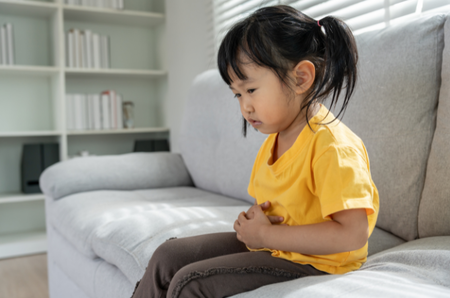
Why do children get constipated?
The causes of constipation in children are often linked to daily habits, such as:
- Not eating enough fruits and vegetables → Lack of fiber softens stools.
- Drinking too little water → The intestines absorb more water, making stools hard.
- Lack of physical activity → Slower bowel movements.
- Incomplete toilet training → Some children hold in stools because they are not yet accustomed to using the toilet.
- Painful bowel movements in the past → Children may fear passing stools and try to hold them in.
- Psychological factors → Moving homes, starting school, or environmental stress.
Research from the American Academy of Pediatrics (AAP), 2021, confirms that establishing healthy eating habits and toilet training from an early age is key to preventing long-term constipation.
Managing constipation in children isn’t just about laxatives
Many parents believe that medication alone will solve constipation, but medicine is only a short-term aid. The more important solution is behavioral modification.
Medication use
- Doctors may prescribe laxatives or enemas (parents should not buy or use these without guidance).
- These help children pass stools without pain or fear while habits are gradually adjusted.
Dietary adjustments
- Increase high-fiber fruits and vegetables, e.g., papaya, banana, apple.
- Avoid snacks, soft drinks, and refined rice that slow down digestion.
- Ensure adequate clean water intake.
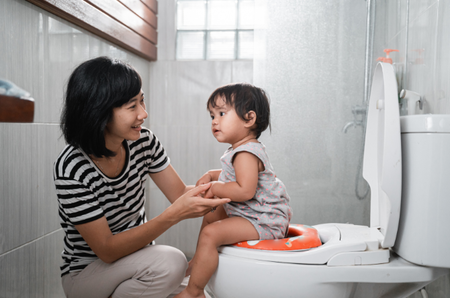
Toilet training
- Have the child sit on the toilet 2–3 times daily after meals.
- Use a small stool or proper foot support for a comfortable angle.
- Avoid scolding or pressuring the child—allow relaxed, stress-free toilet time.
Positive reinforcement
- Offer small rewards such as stickers or verbal praise.
- Create a calm, encouraging atmosphere to prevent fear of the toilet.
Some doctors note that resolving constipation may take months or even a year, as it requires gradual retraining of habits.
What parents should do to reduce the chance of repeated hospital visits
-
Do not stop medication immediately → Continue as directed by the doctor until the child fully recovers.
-
Be consistent → Daily habits like eating vegetables, drinking enough water, and toilet training must be maintained.
-
Avoid harsh discipline → Do not punish the child for messy stools, as this can increase fear of using the toilet.
-
Consult a doctor for abnormal symptoms → Such as blood in stool, weight loss, or frequent vomiting.
Constipation in children is treatable but requires cooperation
Constipation is not a minor issue—it can lead to complications that require hospitalization. The most effective treatment combines behavioral modification with medication, rather than relying solely on medicine.
Parents play the most important role in helping their child. By establishing healthy eating habits, practicing regular toilet training, and offering encouragement, children can gradually recover from constipation and enjoy a better quality of life.
Originally published on theAsianparent Thailand


 Money Tips
 Building a BakuNation
 Becoming a Parent
 Ages & Stages
 Parenting
 Health & Wellness
 Education
 Lifestyle Section
 Become a VIP
 TAP Recommends
 Shopping
 Community
 Rewards
