Research shows: the effects of sleep deprivation in children—and in parents—go far beyond yawning or irritability. They quietly damage the mental health of the entire family.
In today’s fast-paced world filled with screens, quality sleep has unintentionally become a missing piece in many families’ lives. Even young children often don’t get enough rest due to packed schedules. And when parents are also sleep-deprived, stress, exhaustion, and emotional distance begin to build within the family—often without anyone realizing it.
Sleep Isn’t Just Rest—It’s the Foundation of Mental Well-Being
Dr. Brian Razzino, Ph.D., a clinical psychologist specializing in family systems, compares sleep to the foundation of a house—if the base is weak, the structure won’t hold. The same goes for mental health.
According to the American Academy of Pediatrics (AAP), children aged 6–12 years should get 9–12 hours of sleep per night, while teenagers need 8–10 hours.
But in reality, 1 in 3 school-aged children in the U.S. doesn’t meet the recommended sleep duration (CDC, 2020).
Chronic lack of sleep in children is linked to:
- Higher risk of depression and anxiety
- Slower brain function, reduced focus, and poor emotional regulation
- Negative effects on academic performance, memory, and social relationships
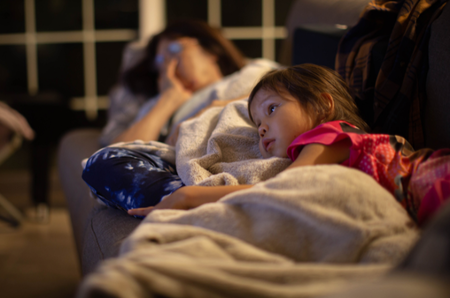
Effects of sleep deprivation in children
Children Who Don’t Get Enough Sleep: Restless Brains, Unstable Emotions
Sleep plays a role in “brain cleansing” (the glymphatic system), which removes toxins and excess information during sleep. If children don’t get enough rest, their brains don’t get the reset they need. As a result:
- Emotional instability, crankiness, or aggression
- Reduced ability to think, analyze, and make decisions
- Increased risk of behavioral issues such as ADHD, depression, or antisocial behavior
A study published in JAMA Pediatrics (2022) found that children aged 6–12 who didn’t get enough sleep were 53% more likely to experience mental health issues compared to those who had sufficient sleep.
Sleep-Deprived Parents Are at Mental Risk Too
It’s not just children who suffer from lack of sleep—parents who lose sleep caring for their children face serious mental health risks as well.
According to data from the National Sleep Foundation (2021):
- New parents lose 400–700 hours of sleep in the first year after childbirth
- Mothers who sleep less than 6 hours a night are twice as likely to experience “baby blues” or postpartum depression
- Chronic fatigue leads to brain fog, poor focus, and reduced quality of life, relationships, and parenting ability
Dr. Rebekka Wall, a sleep expert, explains:
“Sleep deprivation weakens the prefrontal cortex—the brain’s emotional regulation center—while over-activating the limbic system, which controls stress. This causes parents to become more irritable and less patient with their children, often without realizing it.”
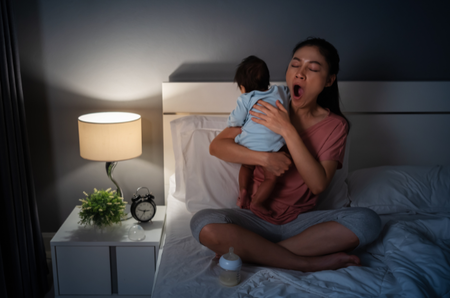
Warning Signs Your Child Isn’t Getting Enough Sleep
Parents can easily spot these common behaviors that may indicate sleep deprivation in children:
- Frequently sleepy during the day, even in the morning
- Moody or irritable more than usual
- Laughing or crying easily (it may seem cute, but it’s actually a sign of fatigue)
- Lacks focus or learns slowly
- Gets sick often, with weakened immunity
7 Expert-Backed Tips to Help the Whole Family Sleep Better
Experts from the Sleep Foundation and Mayo Clinic recommend these practical strategies for improving sleep at home:
- Set a consistent bedtime—even on weekends
- Create a calming bedtime routine: dim lights, warm bath, soft story time
- Avoid screens 1 hour before bed—blue light blocks melatonin, the sleep hormone
- Make the bedroom quiet, dark, and slightly cool to support the body’s sleep cycle
- Don’t use the bedroom for play or TV, so the brain links it only with sleep
- Teach children to sleep independently from a young age using gentle sleep training techniques—without extreme crying
- Parents should prioritize their own sleep too—rested parents are more patient and have more energy to care for their children
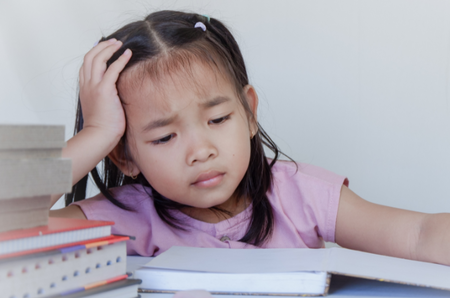
Better Sleep, Better Mental Health for the Whole Family
Sleep is essential for both physical and mental well-being—not just for children, but for parents too. When kids don’t get enough rest and parents are sleep-deprived, it can quietly lead to chronic emotional and behavioral issues.
If parents sleep less and children lack rest, the entire household becomes “unprepared” to face the challenges of a new day.
Start making small changes today—go to bed a little earlier, turn off screens before sleep, establish a calming bedtime routine, and treat rest as a family responsibility that matters just as much as any other task.
Originally published on theAsianparent Thailand


 Money Tips
 Building a BakuNation
 Becoming a Parent
 Ages & Stages
 Parenting
 Health & Wellness
 Education
 Lifestyle Section
 Become a VIP
 Press Room
 Shopping
 Community
 Rewards
