It’s believed that no mother wants her child to get sick or experience any physical or mental abnormalities. However, an unfavorable environment can affect a baby’s skin, which is quite sensitive to stimuli — such as skin allergies, diaper rash, and another common issue that often bothers babies: heat rash in babies.
Heat rash in infants usually occurs during hot and humid weather, making babies sweat easily. This leads to small red bumps that can sting and itch, causing a lot of worry for mothers. That’s why we’ve gathered some helpful information on how to care for and prevent heat rash in babies — just for all moms out there.
Understanding Heat Rash in Babies
Heat rash (prickly heat) appears as small, itchy bumps caused by blocked sweat glands under the skin. It commonly occurs on the face, neck, back, chest, legs, and in skin folds — especially when sweating or in hot and humid conditions.
It can happen to both adults and children, but it’s especially common in newborns since their sweat glands are not yet fully developed.
However, moms don’t need to worry too much — heat rash doesn’t cause any serious harm to the baby’s health. Still, it can make babies irritable, uncomfortable, and less playful due to the itching and stinging sensations.
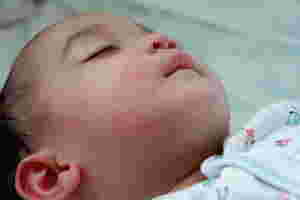
heat rash in babies
Symptoms of Heat Rash in Infants That Moms Can Observe
Heat rash in babies typically appears as itchy skin with small bumps on the body. It can manifest in several forms, such as:
- Clear, fluid-filled bumps that do not cause pain or itching, but may easily break and form scabs.
- Red rash that causes itching, stinging, and irritation.
- Flesh-colored bumps that resemble goosebumps and usually don’t cause other symptoms.
These symptoms often go away on their own when the weather cools down. However, you should take your baby to the doctor if any of the following occurs:
- The rash doesn’t go away and continues to cause itching, stinging, or pain for more than 2–3 days.
- The rash changes, such as becoming a bright red color.
- Swollen lymph nodes are present.
- The baby shows increasing signs of pain, or the affected area becomes swollen, red, or warm — which could indicate an infection.
- There are clear signs of infection, such as the rash developing pus.
- The baby develops a fever or shows signs of other underlying illnesses.

How to Prevent Heat Rash in Infants
Thailand’s weather is generally hot, so to help prevent heat rash in babies, here are some practical tips:
- Dress your baby in soft, lightweight, breathable clothing that helps keep them cool and reduces skin irritation.
- Avoid exposing your baby to hot and humid environments. If you need to go outside, bring a portable fan to help cool them down.
- To relieve skin heat, gently apply a soft, clean cloth soaked in cool water (wrung out) to your baby’s skin. This helps cool the skin effectively.
- Use fragrance-free and color-free baby soap when bathing your baby.
- Avoid lotions containing petroleum jelly or mineral oil, as they may clog pores. Instead, use lotions with organic plant-based extracts.
Originally published on theAsianParent Thailand


 Money Tips
 Building a BakuNation
 Becoming a Parent
 Ages & Stages
 Parenting
 Health & Wellness
 Education
 Lifestyle Section
 Become a VIP
 Press Room
 Community
 Rewards
 VIP Parents
