The belief that morning sickness and baby gender are connected, especially through cravings—such as sour or salty foods meaning a boy, or sweet foods meaning a girl—has been passed down for generations. But how true is the link between morning sickness and baby gender from a medical and scientific perspective? Today, we’ll explore every aspect.
Exploring the True Causes of “Food Cravings” During Pregnancy
Before we can answer whether morning sickness can predict a baby’s gender, we need to understand the real origins of food cravings in pregnant women. This is not unusual; statistics show that over 50–90% of pregnant women worldwide have experienced it. Medically, the main causes are complex and result from several combined factors:
1. Massive Hormonal Changes
This is the most important factor. Throughout pregnancy, a woman’s body undergoes significant hormonal changes at levels much higher than usual.
-
hCG (Human Chorionic Gonadotropin): This is one of the first hormones produced after fertilization and is what causes a pregnancy test to show two lines. hCG levels rise rapidly in the first trimester and are believed to play a key role in nausea, vomiting, or “morning sickness.” They also affect taste and smell, which can make a woman dislike foods she previously enjoyed or crave foods she never thought she wanted.
-
Estrogen and Progesterone: These two female sex hormones increase throughout pregnancy. They are essential for maintaining a smooth pregnancy but also affect sensory perception, especially heightened taste and smell. This is why some women notice stronger scents or altered food flavors, leading to more intense cravings.
2. Nutritional Needs of the Body
The body is more amazing than we think. Sometimes cravings are a signal that the body needs certain nutrients to support the development of the baby’s organs and growth.
-
Craving salty foods: May be related to the nearly 50% increase in blood volume during pregnancy, which requires sodium to maintain fluid balance.
-
Craving dairy products, ice cream, or cheese: Could indicate a need for more calcium and protein for the baby’s bones and teeth.
-
Craving red meat: Might signal a need for more iron and protein to prevent anemia and support muscle development for both mother and baby.
3. Psychological and Environmental Factors
Pregnancy is a major physical and emotional change. Sometimes cravings act as a psychological comfort mechanism, or “comfort food,” helping to soothe stress and anxiety. The environment also plays a role—for example, frequently seeing ads for certain foods can trigger cravings.
Therefore, it is clear that a pregnant woman’s cravings have scientific explanations, mainly related to hormones and the body’s needs, and are not directly influenced by the baby’s gender.
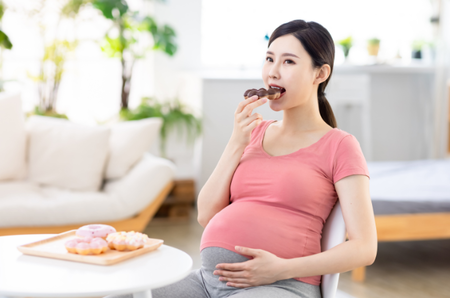
Do Research and Statistics Show Whether Morning Sickness Can Predict a Baby’s Gender?
Regarding the belief that craving sour foods means a boy and craving sweet foods means a girl, there is currently no large, reliable, and widely accepted medical research that can prove a direct link between the type of food a pregnant woman craves and the baby’s gender.
Efforts to study this have been ongoing, but the results have not been statistically significant enough to establish it as a fact.
Research Findings
One recognized study published in Frontiers in Psychology in 2014 surveyed and collected data on food cravings in pregnant women. The study found that the foods most craved by pregnant women were sweets (such as chocolate and ice cream), fruits, and high-fat foods. No significant differences were observed between women carrying boys or girls. This means that regardless of whether the baby is a boy or girl, mothers are similarly likely to crave sweet foods.
Statistics and Probability
This is the key point that explains the phenomenon. Naturally, the chance of having a boy or a girl is approximately 50/50. Therefore, if a mother craves sour foods and happens to have a boy, it is simply a 50% statistical coincidence. Our brains tend to remember the “correct guesses” more easily—a phenomenon known as confirmation bias—while ignoring the incorrect ones. This is why such beliefs continue to be shared, even though many women who crave sour foods may have girls, or those craving sweets may have boys.
In conclusion, the belief that morning sickness can predict a baby’s gender is just a fun story without sufficient scientific evidence.
So, What Can Accurately Determine a Baby’s Gender?
Since food cravings cannot reliably predict a baby’s gender, what methods are medically accurate? Modern medicine provides several reliable ways to determine a baby’s sex:
This is the most common and safe method. Obstetricians can clearly see the baby’s genitalia during the second trimester, around 18–22 weeks of pregnancy. The accuracy of this method is 95–99%, depending on factors such as the baby’s position, amniotic fluid volume, and the skill of the examiner.
2. Non-Invasive Prenatal Testing (NIPT)
NIPT involves taking a blood sample from the mother to analyze the baby’s DNA present in her bloodstream. It can be performed from 10 weeks of pregnancy and not only screens for Down syndrome and other genetic disorders but can also determine the baby’s sex with up to 99% accuracy.
3. Amniocentesis or Chorionic Villus Sampling (CVS)
These diagnostic procedures are usually done for high-risk pregnancies, such as older mothers or abnormal screening results. They can determine both the baby’s sex and chromosomal abnormalities with 100% accuracy. However, because these procedures carry a small risk of miscarriage, they are not performed for every mother.

How to Manage Cravings for a “Healthy” Pregnancy for Both Mother and Baby
Although the idea that morning sickness can predict a baby’s gender is not true, food cravings are very real for expectant mothers. Managing these cravings wisely is key to maintaining good health throughout pregnancy.
Listen to Your Body, but Practice Moderation:
Indulging occasionally is fine, but it should be done in balanced and appropriate amounts.
Choose Healthier Alternatives:
- Craving sweets: Instead of cake or ice cream, try fresh sweet fruits like ripe mango, banana, dates, or plain Greek yogurt with a little honey and berries.
- Craving salty foods: Instead of fried chips or instant noodles, opt for lightly salted roasted almonds, edamame, boiled corn, or small fish.
- Craving sour foods: Eat naturally sour fruits such as oranges, pineapple, kiwi, or unripe mango (paired with low-sugar, low-sodium dips), or drink water with sliced lemon for refreshment.
Special Precautions:
- Craving non-food items: If there is a strong desire to eat non-food items such as soil, sand, chalk, raw flour, or ice, consult a doctor immediately. This could signal a severe mineral deficiency, such as iron or zinc.
- Watch hidden sugar and sodium: Consuming too many sweets or salty foods over time can increase the risk of gestational diabetes and high blood pressure, which can be dangerous for both mother and baby.
Have Fun Guessing, but Don’t Take It Seriously
In summary, the belief that morning sickness can predict a baby’s gender is just a myth without scientific support. Cravings during pregnancy result from complex hormonal changes and the body’s nutritional needs during this special time.
Guessing the baby’s gender from morning sickness or cravings can be a fun family activity, but it should not be taken seriously or cause stress.
Ultimately, whether morning sickness and baby gender are truly connected or not, the most important thing is to focus on the mother’s health. Regardless of morning sickness and baby gender myths, what matters most is eating a balanced diet, getting enough rest, and attending regular prenatal check-ups to ensure a safe and healthy baby.
Originally published on theAsianparent Thailand


 Money Tips
 Building a BakuNation
 Becoming a Parent
 Ages & Stages
 Parenting
 Health & Wellness
 Education
 Lifestyle Section
 Become a VIP
 Press Room
 TAP Recommends
 Shopping
 Community
 Rewards
 VIP Parents
